Giroscope is pleased to announce a research partnership with the University of East London (UEL), exploring how self-help housing can help people move on from long-term homelessness or unstable housing.
The project brings together Giroscope’s forty years of hands-on experience with academic research led by PhD candidate Mark Sustr, supported by UEL’s supervisory team: Alan Chandler, Dr Anna Minton, and Roland Karthaus.
The aim is to better understand the difference self-help housing makes in people’s lives and its contribution to pathways out of homelessness.
The study has been following participants in Giroscope’s programmes over the course of a year through a series of interviews, and case studies, helping to build a picture of how their situations, confidence, and sense of control change over time.
Mark Sustr, PhD candidate, University of East London
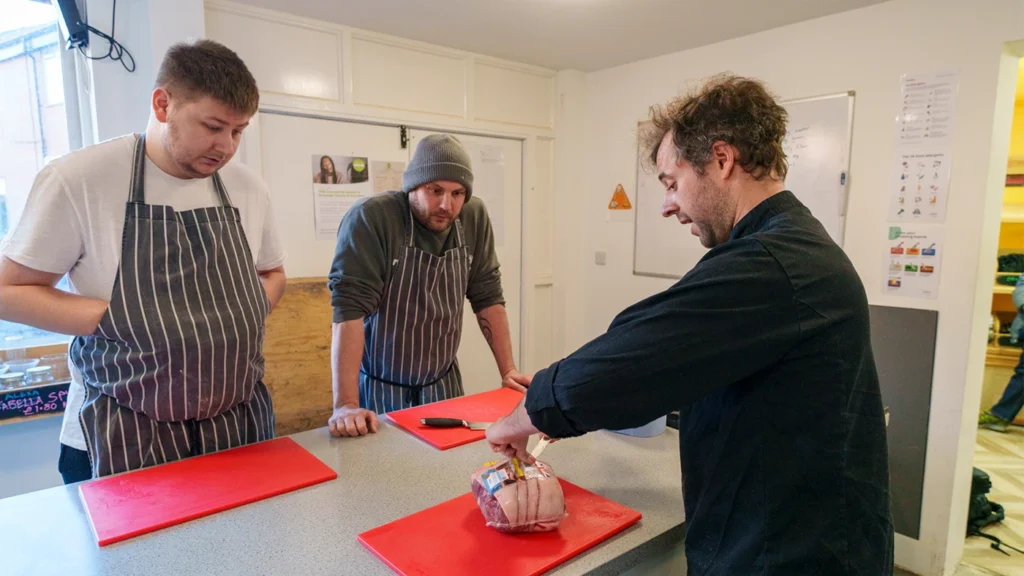
The research also explores how Giroscope’s projects work in practice, and how factors such as support, environment, and community shape people’s experiences.
By combining participant’s experiences with a wider view of the challenges they face, the research aims to better understand how self-help housing supports people, and how it can be further developed to strengthen outcomes.
For Giroscope this is an opportunity to reflect on and build upon its work while keeping participant’s voices at the centre. For the University of East London, the project contributes to research on housing and homelessness.
The findings aim to inform future policy and practice, particularly ways to support people into stable housing and improve their long-term well-being.